
Welcome to the Nostalgic Motor Cars Technical Library. For nearly 50 years, my only full-time job has been the service and preservation of 1963-1985 Avantis. These articles are compiled from my personal experience and original Studebaker factory blueprints to help you maintain the safety, value, and authenticity of your car.
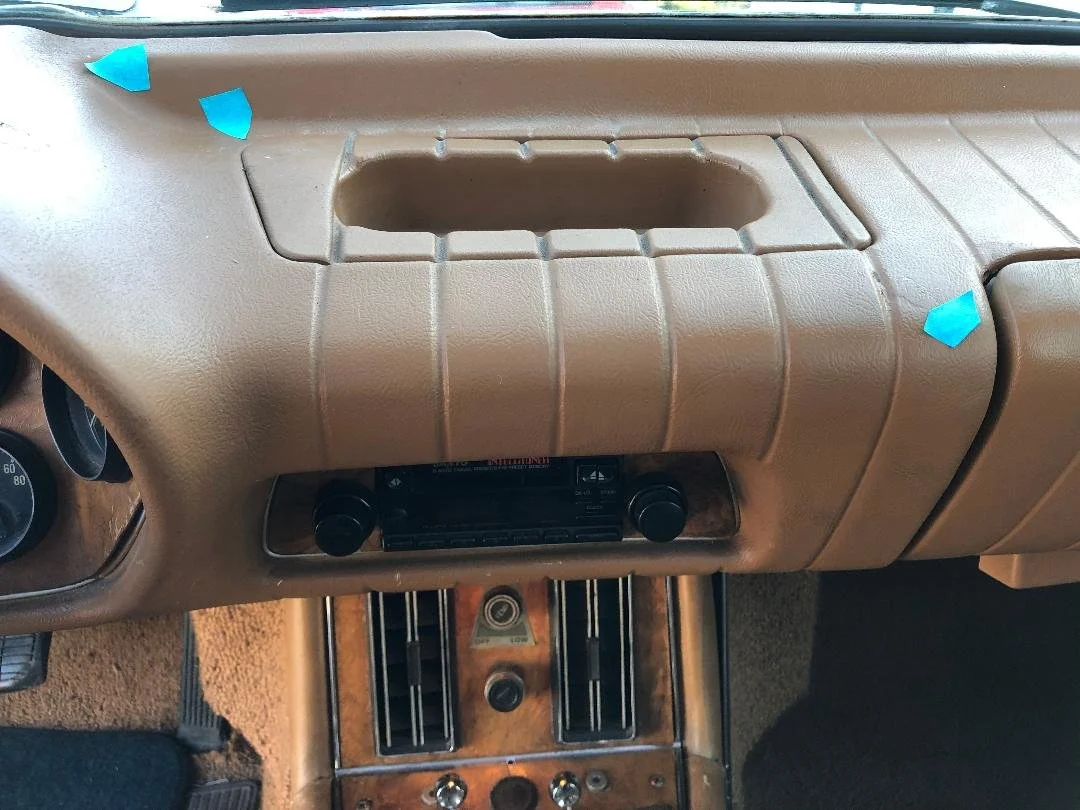
The "Squeeze Test": Authenticating the 1963–1983 Avanti "Safety Dash"
Is your Avanti dash pad a genuine factory original or a hardened aftermarket reproduction? Drawing on 47 years of experience and original Studebaker blueprints, Dan Booth reveals the unknown facts about the Avanti "Safety Pad." Learn the "squeeze and twist" test to verify original flexibility and the "lacquer thinner" trick to identify inferior black-vinyl rebuilds.
Discover why the often-misunderstood "steps" at the windshield are an engineered necessity for proper glass installation, and why a factory-correct NOS pad can increase your car’s resale value by over $5,000. Whether you are prepping for a concours show or a restoration, this guide is the definitive resource for identifying authentic 1963–1983 interior components.
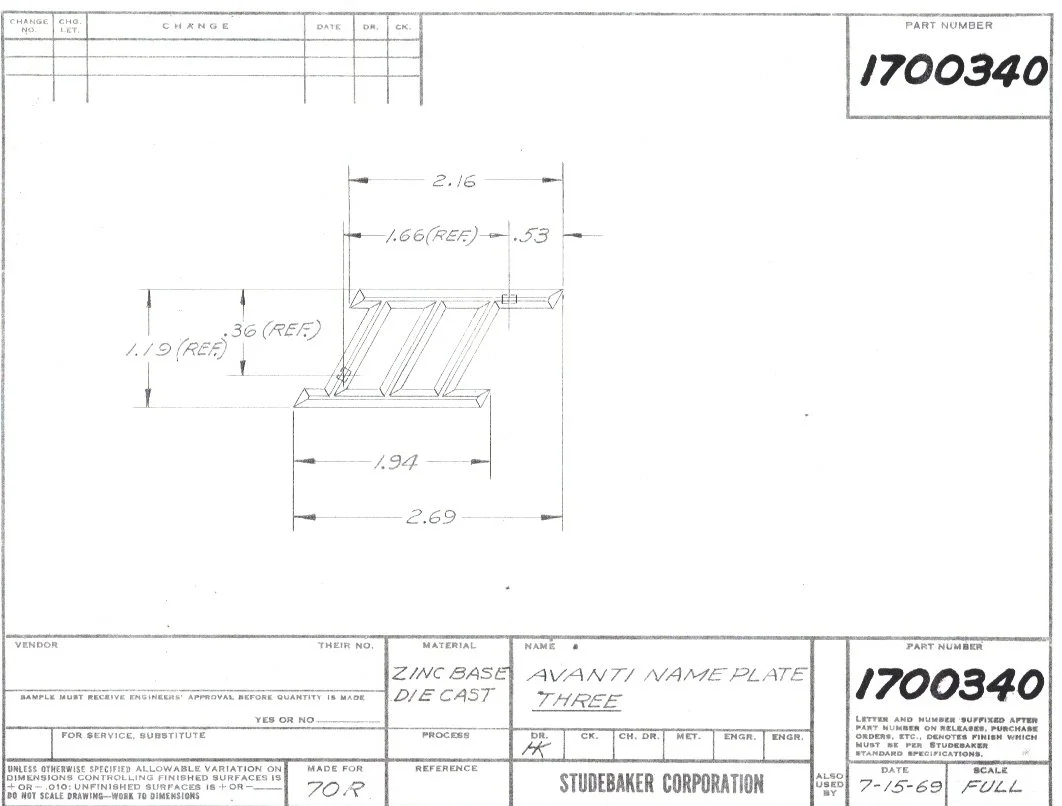
The Lost "III": Uncovering the Mystery of Avanti Part #1700340
For decades, rumors circulated through the Avanti community about a planned "Roman Numeral III" emblem designed to mark the transition to the 1970 model year. In this historical deep-dive, Dan Booth finally solves the mystery using original factory blueprints discovered in the Nostalgic Motor Cars archives.
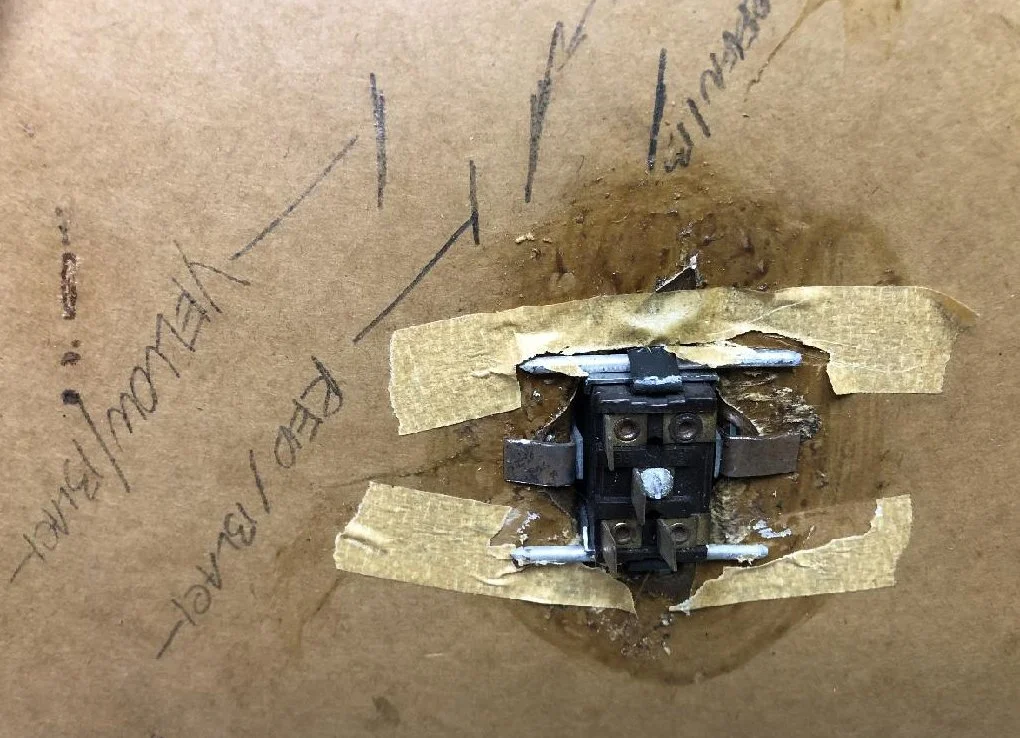
The Unknown Clever Thinking of Altman's Avanti Motors
Are your Avanti’s power window switches constantly popping out of the door panels? You aren't alone. This rare factory option, found on 1963–1973 models, featured a mounting system prone to loosening as the door panel cardboard aged. In this technical guide, Dan Booth reveals a "clever" factory-authorized secret for locking switches into place using simple rods—or even nails—to keep the NOS #1351343 clips tensioned.
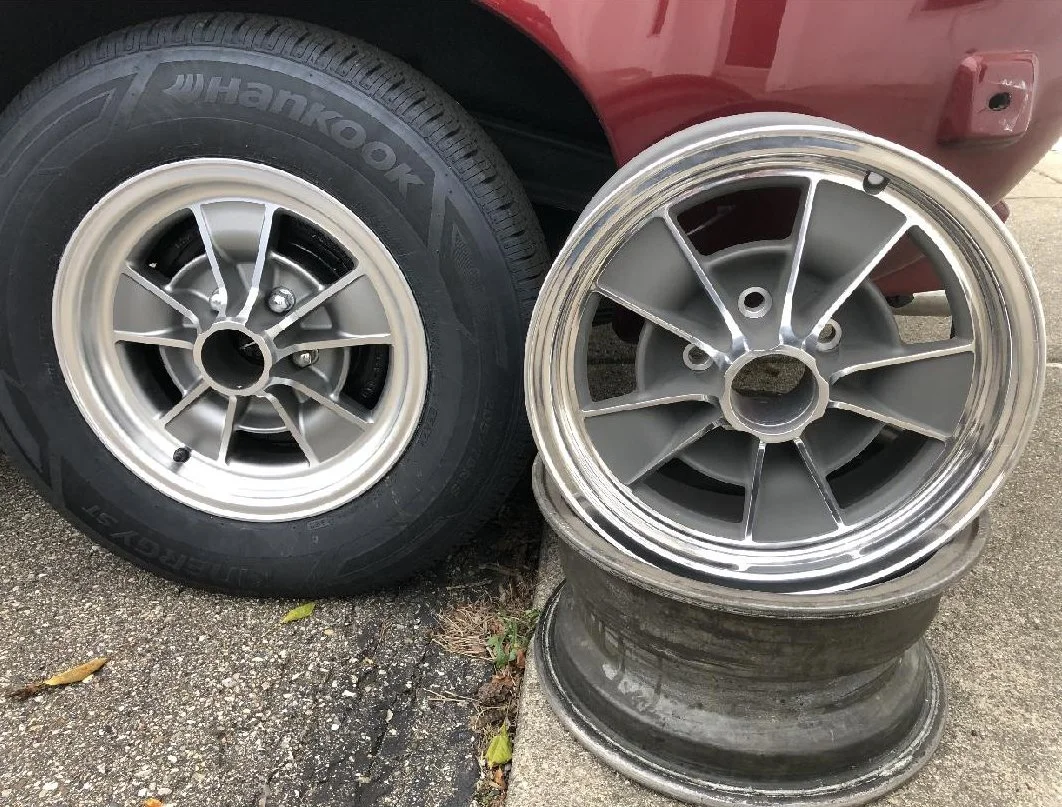
Are Your Avanti Wheels Safe to Drive?
Are you still driving on the original 5-inch narrow steel wheels or the 1980s factory black mesh aluminum wheels? In this urgent technical report, Dan Booth exposes two major safety hazards that most Avanti owners and mechanics are completely unaware of.
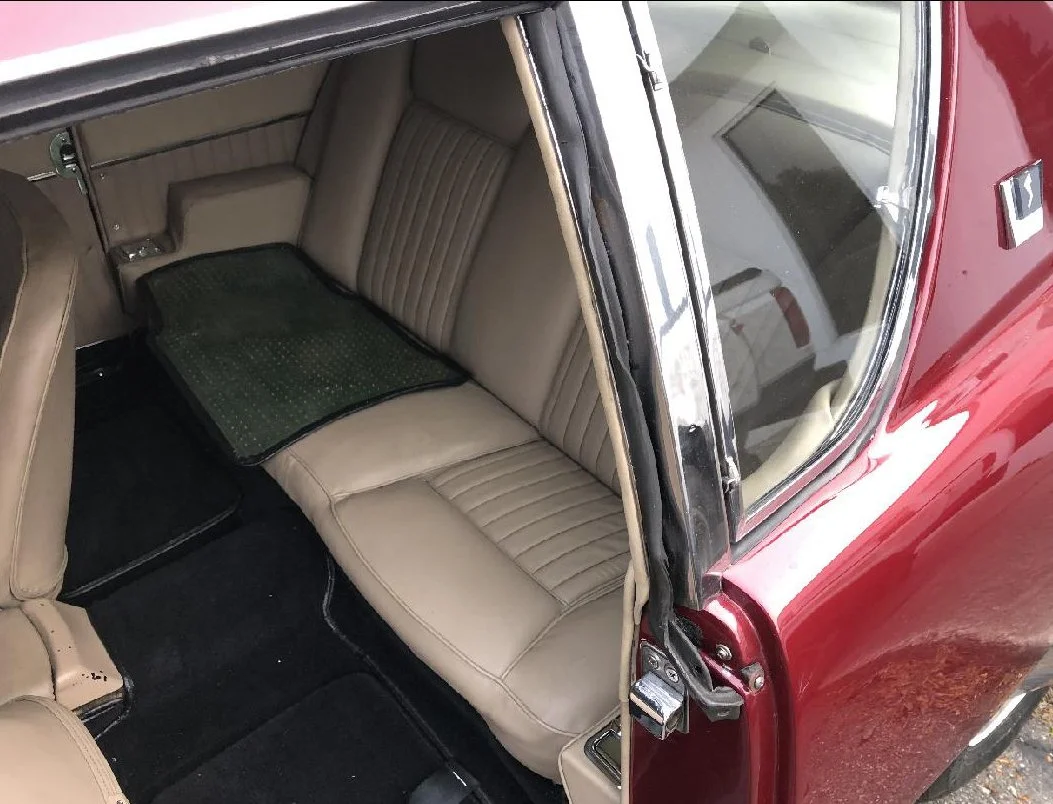
Dry and Quiet: The Specialist’s Guide to Avanti B-Pillar "Dog Leg" Weather Seals
The Studebaker Avanti has a long-standing reputation for interior and trunk leaks, but as specialist Dan Booth reveals, a properly sealed Avanti should never leak. In this technical deep-dive, learn the secrets behind the B-pillar—or "Dog Leg"—weather seals (Part #1350856/857) that protect your interior and spare tire well from moisture.
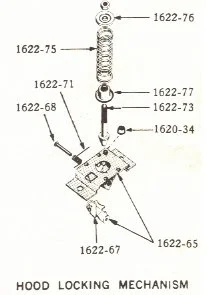
Emergency Cooling & Preservation: The Avanti Hood Hardware Guide
While crossing the Arizona desert in a 110-degree heatwave, Dan Booth discovered that even functioning factory electric fans couldn't always keep a late-model Avanti cool. In this article, Dan shares the ingenious "gas station" fix he used to create an emergency heat vent using nothing more than a wrench and a roll of toilet paper.
Locked Out? The Complete Avanti Hood Pull Cable Replacement & Emergency Release Guide
Does your Avanti’s front seat back rock or "flop" when you drive? Many owners don't realize that the plastic sleeves (bushings) inside the seat hinges are high-wear items. When they deteriorate, hinge holes become elongated, leading to permanent damage to the expensive chrome hardware and fiberglass shells.
Fixing the "Flop": How to Rebuild Avanti Standard Front Seat Hinges (1963–1983)
Does your Avanti’s front seat back rock or "flop" when you drive? Many owners don't realize that the plastic sleeves (bushings) inside the seat hinges are high-wear items. When they deteriorate, hinge holes become elongated, leading to permanent damage to the expensive chrome hardware and fiberglass shells.
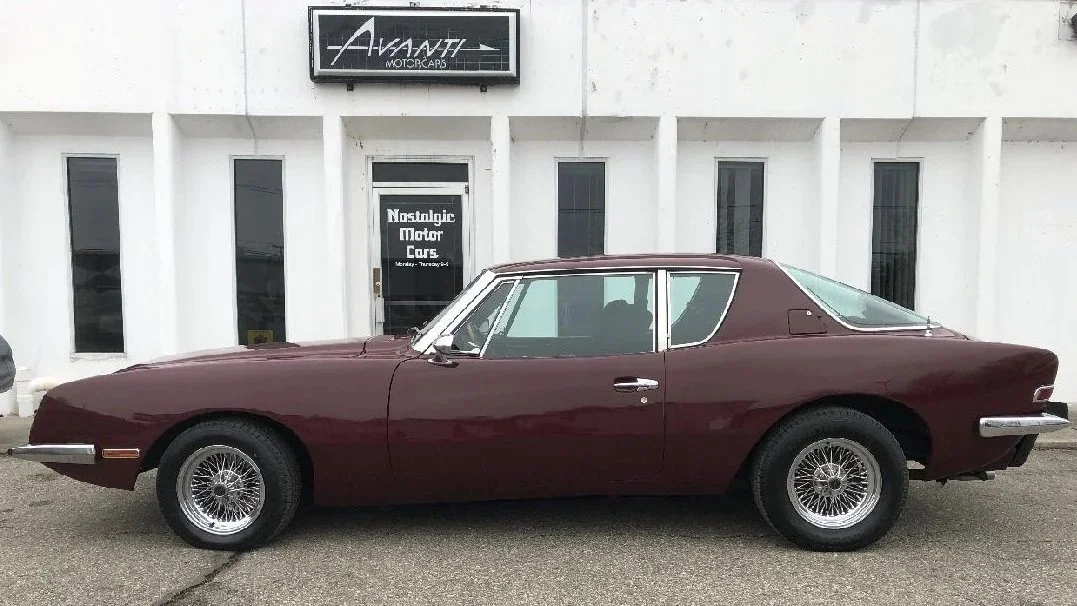
Creating the "Nostalgic Rake": How to Perfect the Stance of Your 1965–1985 Avanti
Why does the 1963 Studebaker Avanti often look "sleeker" than the later Avanti II models? The secret is in the stance. When Avanti Motors transitioned to the Chevrolet engine in 1965, engineering requirements led them to raise the front of the car, eliminating the aggressive factory "rake" that defined the original design.
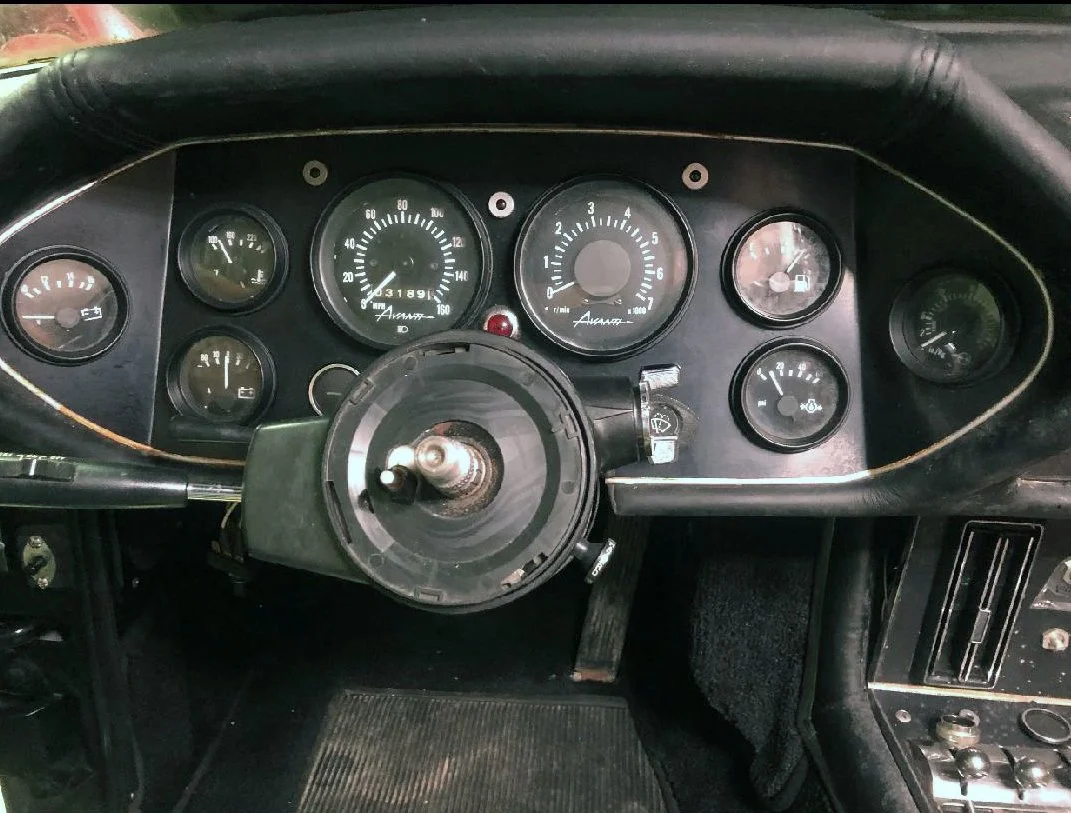
Shedding Light on a Classic: The History of Avanti Dash Illumination (1963–1985)
Why are Avanti gauges notoriously difficult to read at night? The answer lies in the evolution of "gang lighting" and factory design changes over 22 years of production. In this expert guide, Dan Booth explores the four distinct styles of red dash lighting used from the original 1963 Studebaker Avanti through the final 1985 models.
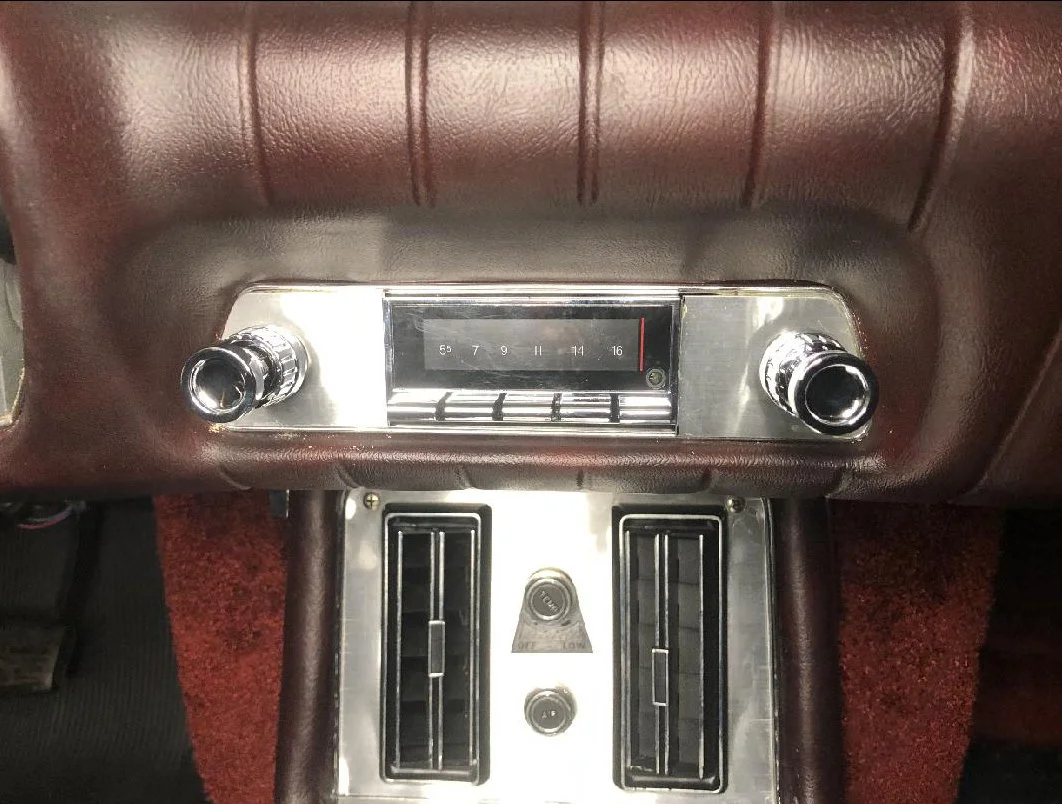
Modern Sound, Factory Look: Installing a No-Cut Custom Radio in your 1963-1985 Avanti
One of the quickest ways to ruin the value of an Avanti is by "butchering" the fiberglass dash to fit a modern stereo. In this guide, Dan Booth explains how to achieve the best of both worlds: modern high-quality audio with a 100% factory-correct appearance.
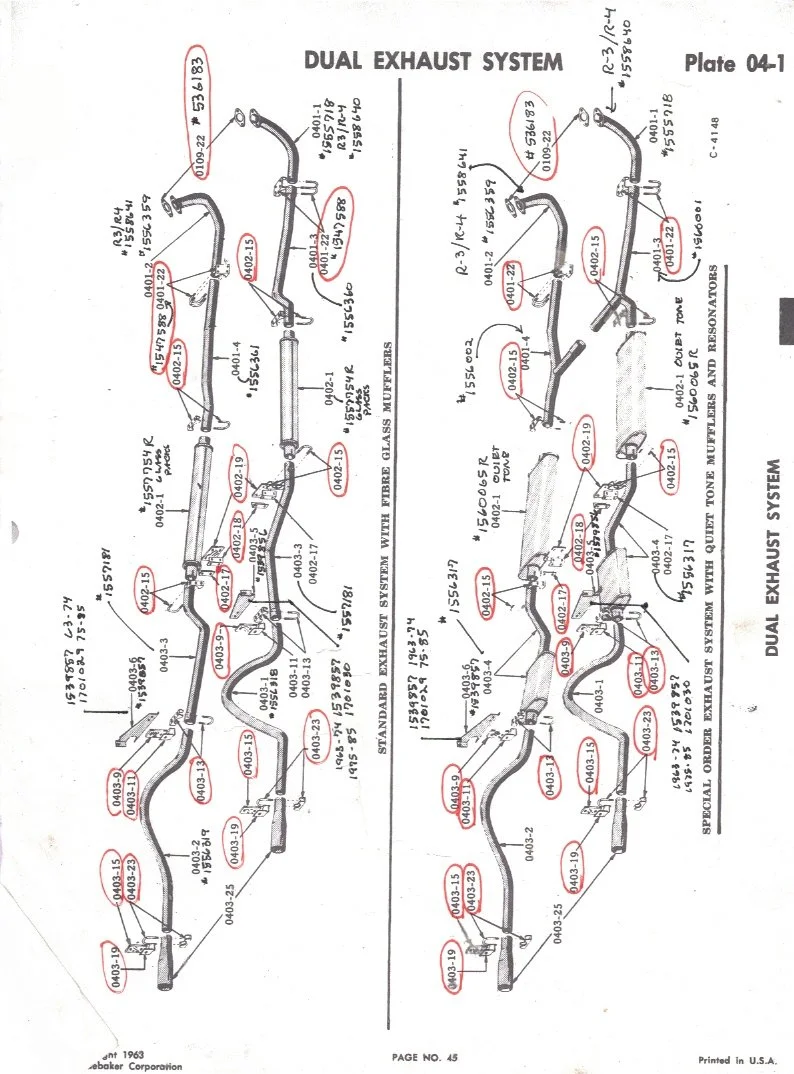
The Avanti Exhaust Masterclass: Blueprint-Bent Accuracy vs. Muffler Shop Guesswork
Installing an exhaust system on a 1963–1985 Avanti is a notorious challenge, requiring precise clearances around the steering control valve, oil filter, and X-member frame. In this definitive guide, Dan Booth explains why generic muffler shop pipes often fail and why authentic, blueprint-bent components are the only solution for a rattle-free fit.
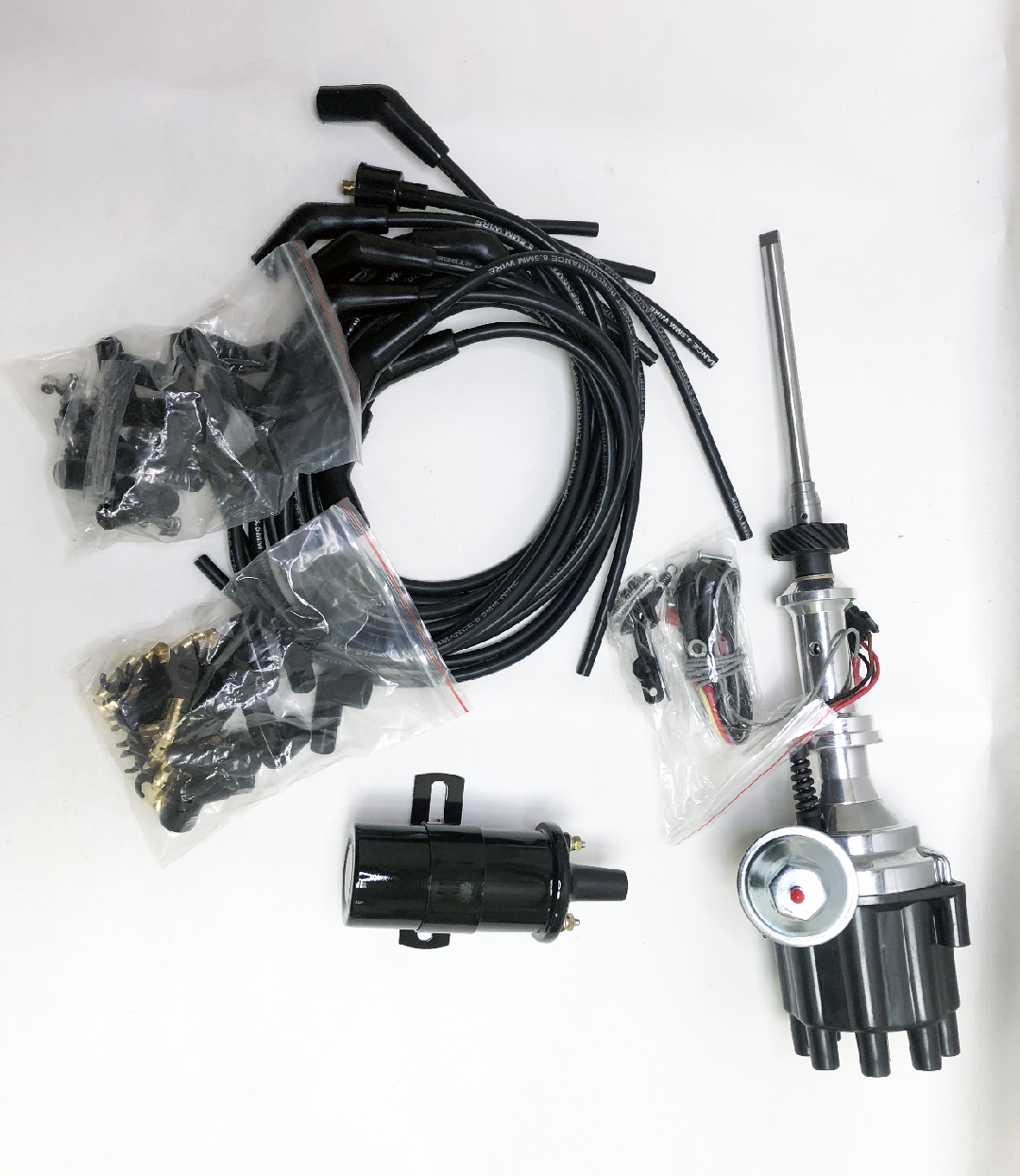
Avanti Ignition Secrets: Why Your 60-Year-Old Distributor is Costing You Performance
Is your 1963-1964 Avanti running rough or becoming difficult to start? The original dual-point distributor has served for nearly 60 years, but mechanical wear in the main shaft and bushings often goes unnoticed. While many owners try to fix this with a simple electronic point-delete module, these "quick fixes" don't address the underlying mechanical sloppiness that causes inconsistent timing.
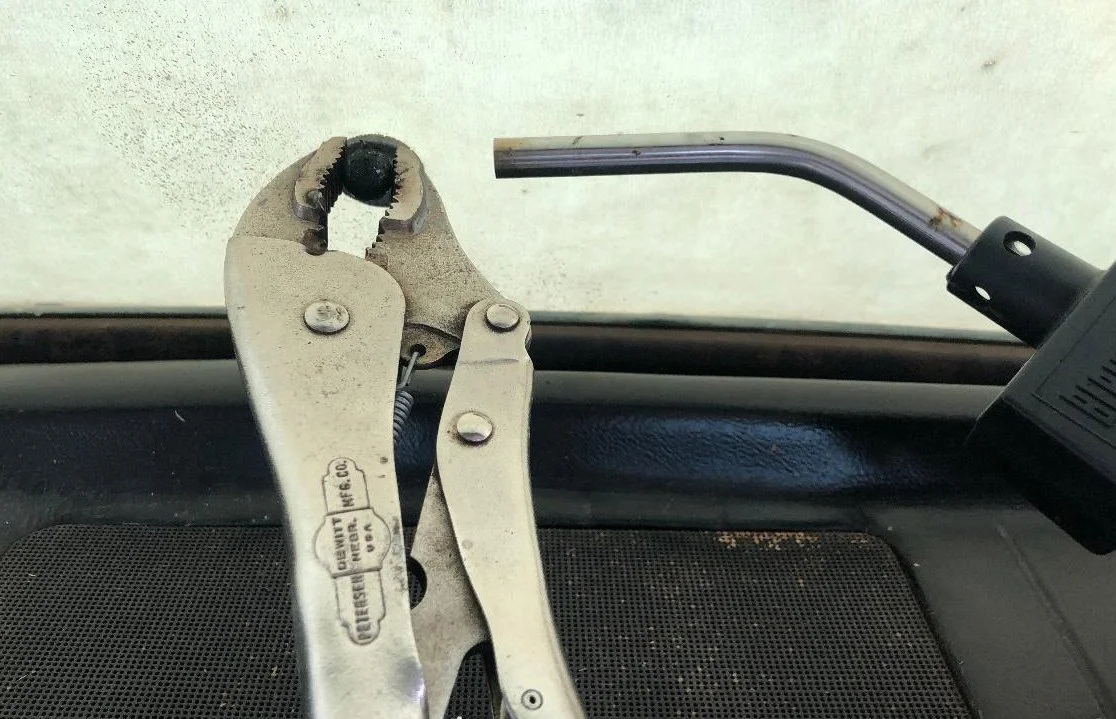
Improving Vision: Avanti Rear View Mirror Relocation and Replacement Guide
Struggling to see what's behind you in your Avanti? The combination of a tiny original mirror, a low-mount position, and the classic "Avanti Rake" creates a notorious blind spot for drivers. In this guide, Dan Booth explores the evolution of the Avanti mirror from the 1.5-inch Studebaker originals to the modern 1980s Day/Night versions.
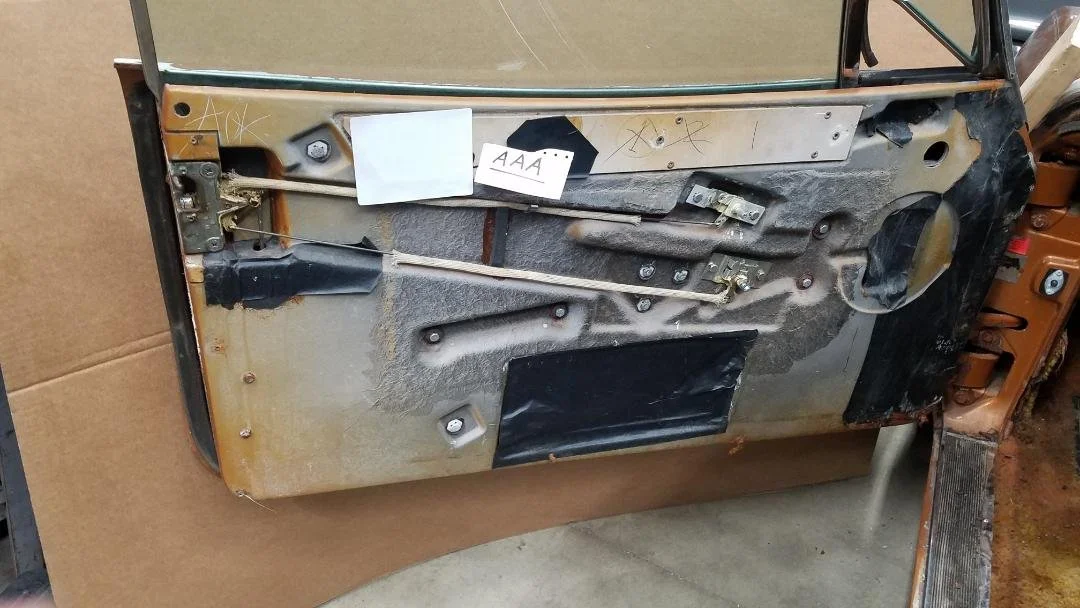
Hidden Danger: Preventing Catastrophic Avanti Door Glass Failure
Is your Avanti door glass loose, or does it rattle when you close the door? Behind that sleek fiberglass exterior lies a thin, .050" steel channel known as the "Shotgun" assembly that is prone to severe rust after 40+ years of moisture exposure. If this channel or the accompanying cushion strips fail, your rare door glass can separate and crash into the bottom of the door, resulting in an expensive, shattered mess.
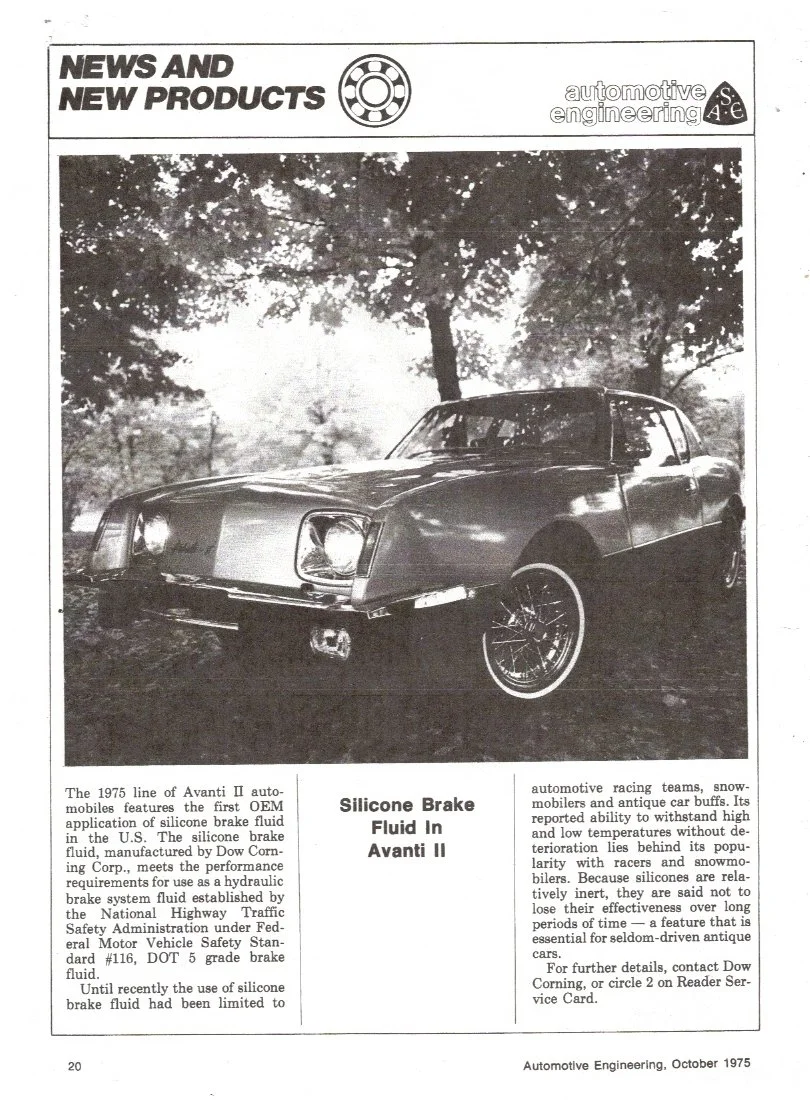
The Silicone Secret: A Guide to Avanti Brake Fluid Conversion and Maintenance
For decades, the use of DOT 5 Silicone brake fluid has been surrounded by "mystique" and misinformation. Did you know that Avanti Motors was the first American OEM to install silicone fluid in production cars starting in 1975? In this technical deep-dive, Dan Booth uses original Dow Corning factory data and his 45 years of service experience to debunk common myths regarding fluid compatibility.
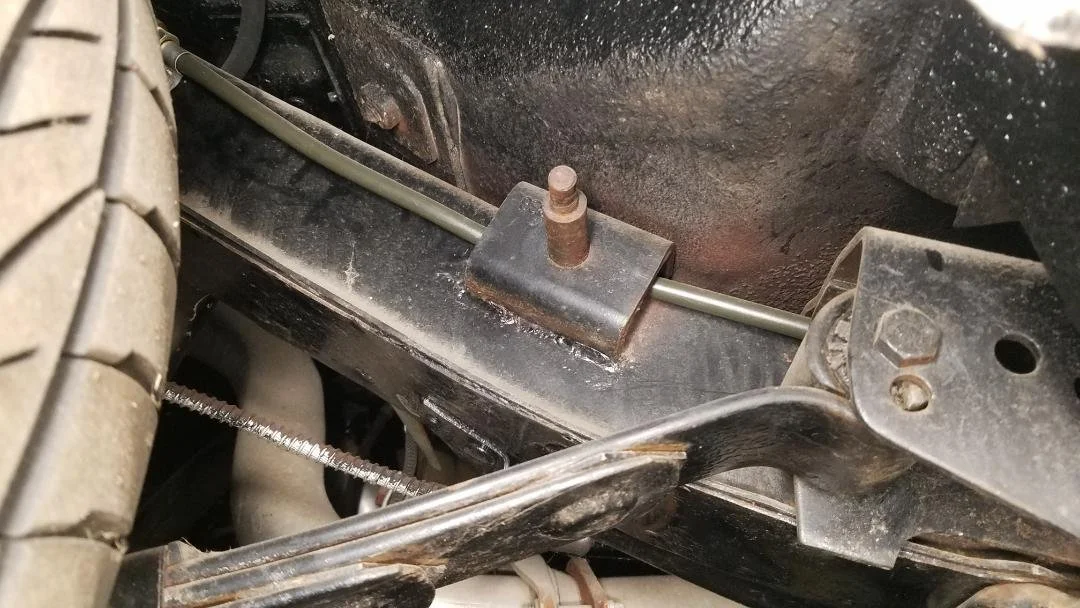
The "Secret" Factory Fix: Repairing Broken Avanti Radius Rod Front Mounts
Have you ever experienced a mysterious "hammering" sound coming from the rear of your Avanti during acceleration or braking? This is often caused by a broken front mounting stud on the frame bracket for the rear axle radius rod. While many mechanics assume this requires a complex frame repair, Avanti Motors actually engineered a specific solution.
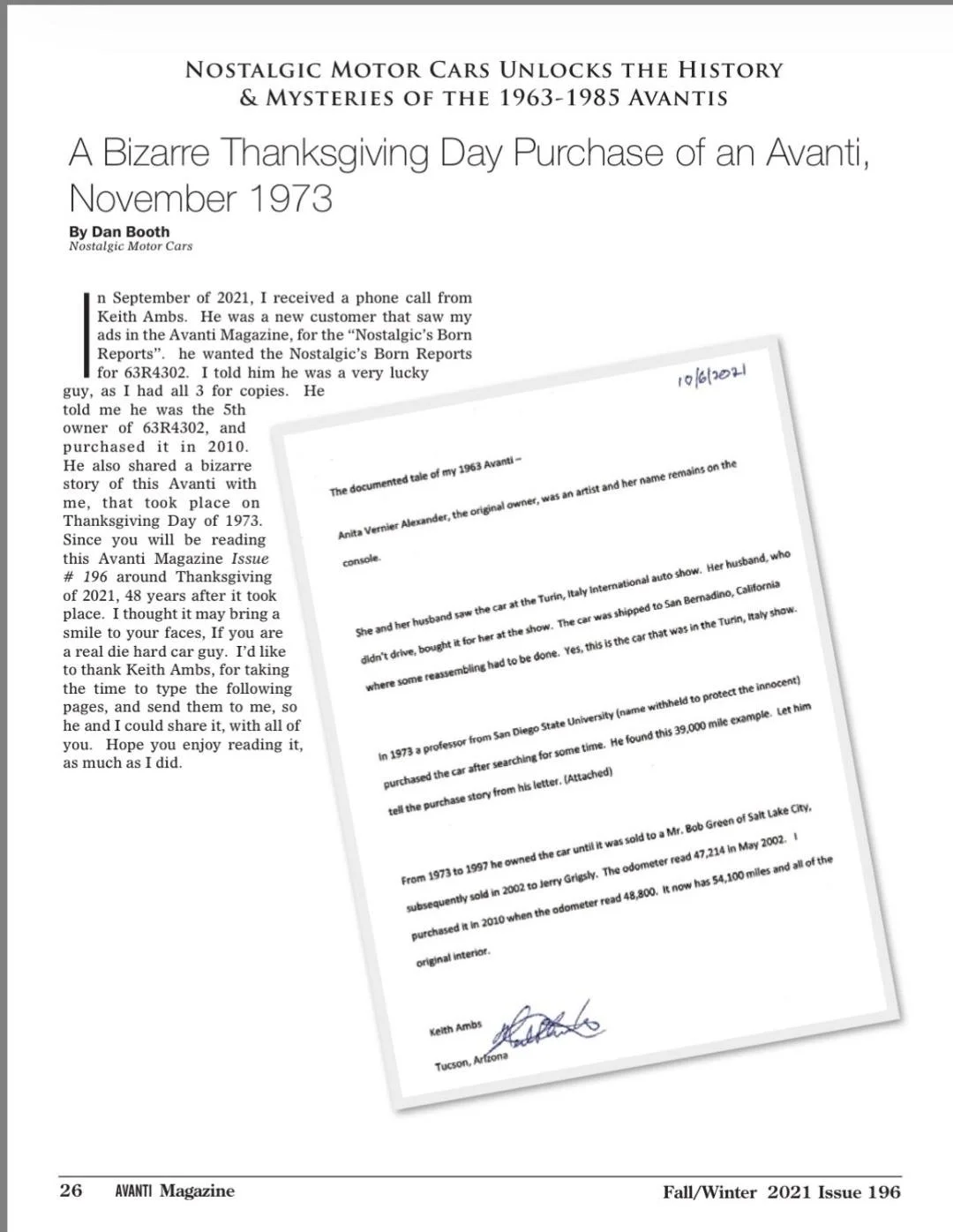
Avanti 63R4302: From the Turin Auto Show to a Bizarre 1973 Purchase
Can a car cause a 25-year grudge? In one of the most unusual tales in the Avanti community, Dan Booth shares a letter regarding the history of Avanti 63R4302. This wasn't just any 1963 Studebaker; it was originally a display car at the Turin Auto Show in Italy, gifted to an Italian artist by her well-to-do husband and shipped to the USA in crates.
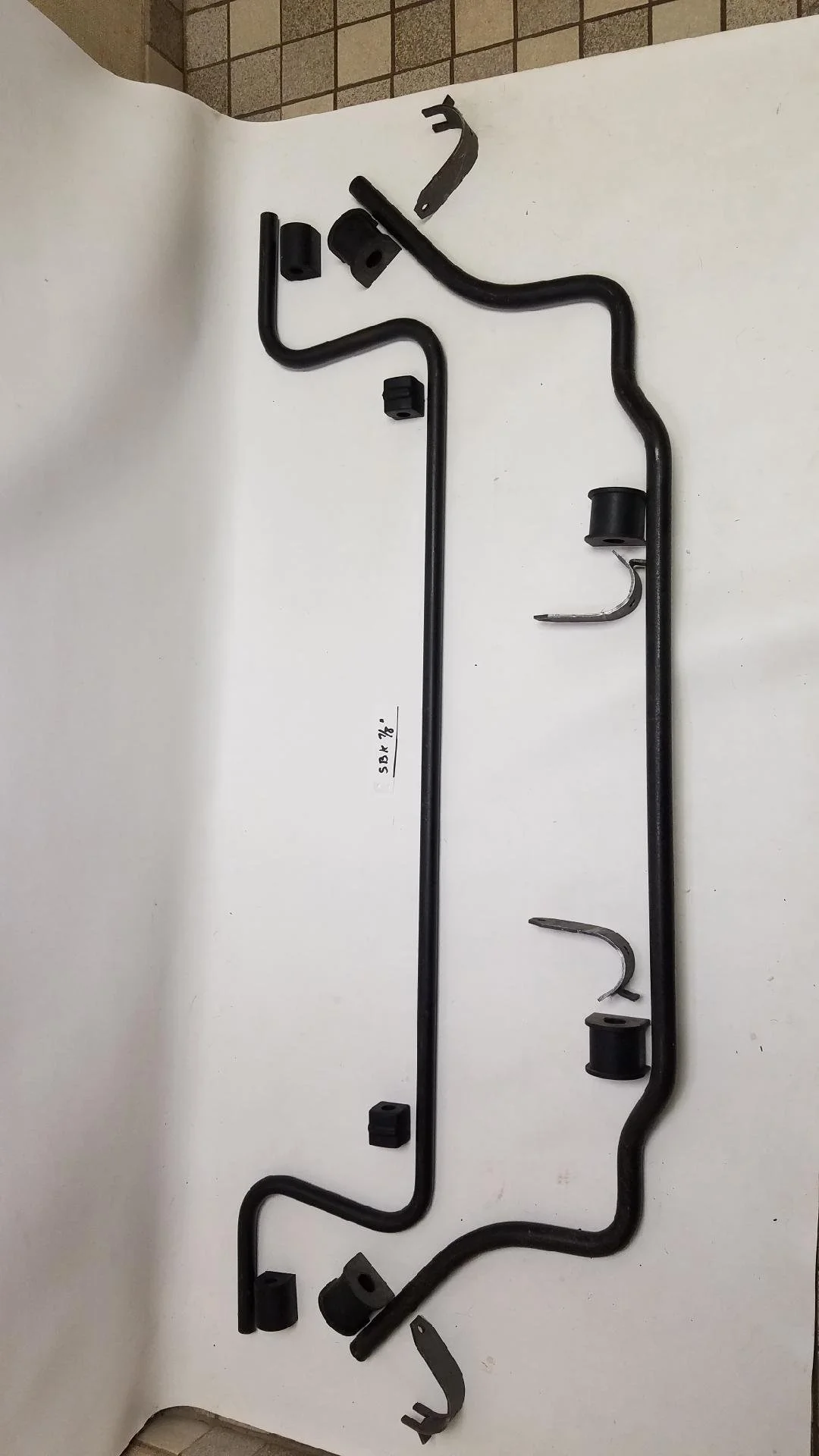
Avanti Handling Secrets: The Evolution of Front and Rear Sway Bars
Looking to sharpen your Avanti’s handling and eliminate body roll? In this technical guide, Dan Booth explores the history of factory stabilizer bars from 1963 through 1985. Discover why the "bigger is better" philosophy of the 1983 Anniversary Edition led to unexpected rattles and how Avanti Motors engineered a 7/8" solution that provides the perfect balance of performance and comfort.
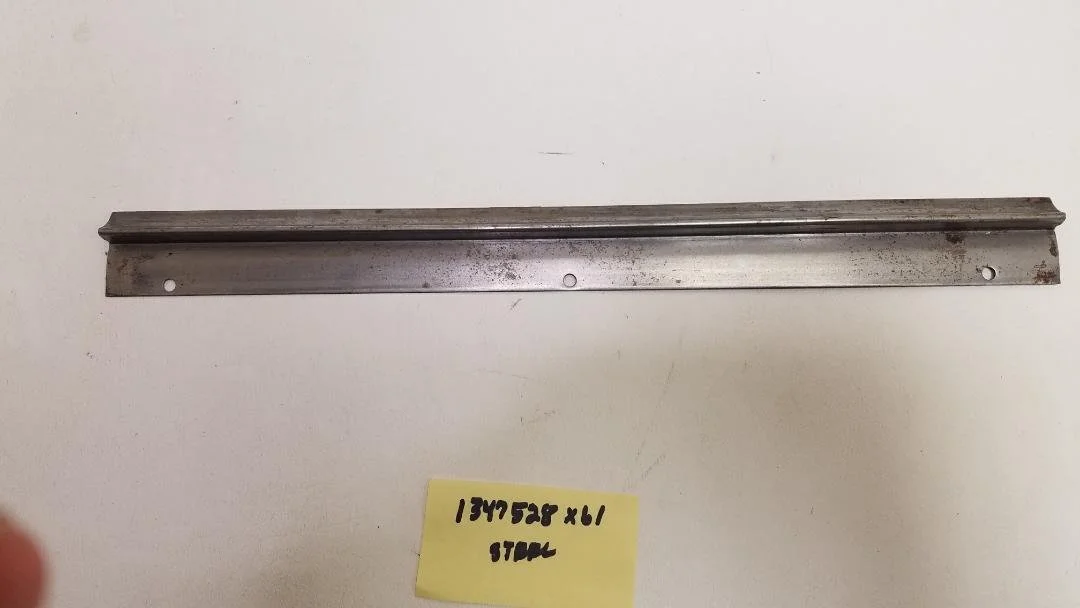
The Most Overlooked Avanti Interior Part: Cowl Kick Pad Moldings
Are your Avanti's kick panels looking ragged or rusty? Specialist Dan Booth identifies one of the most frequently ignored trim pieces on 1963–1985 models: the cowl kick pad molding (Part #1347528x61). Originally made of painted steel, these vertical retainers are magnets for moisture and foot-traffic damage